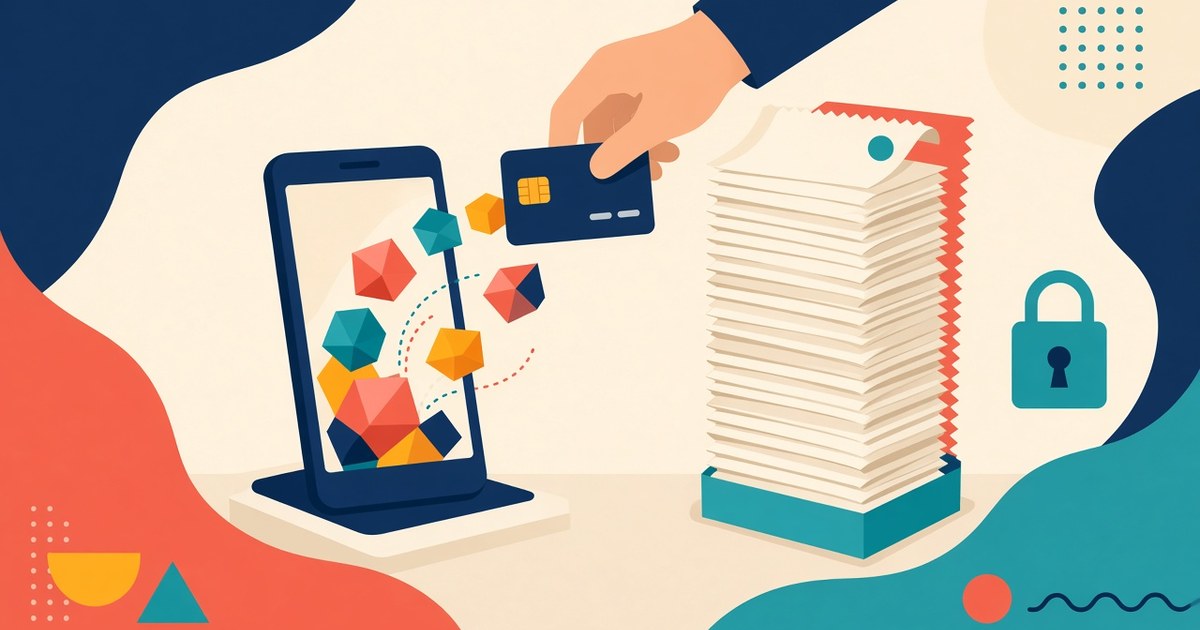
A 10 Year Old Spent $480 on Brawl Stars in 3 Weeks: How to Stop Kids’ In-App Purchases
The bank statement arrived on WhatsApp on a Monday. Diego (the dad and the son share the name) looked at the account as calmly as ever. Then he sat up. Then he looked again. $480 in three weeks, in small charges, all labeled “Google Play.”
His first thought was fraud. He called the bank. The bank told him what you are already guessing: it was not fraud. They were in-game purchases, made from his son’s phone, using the card he himself had saved to the Google account. The game was Brawl Stars.
When he asked Diego Jr. (10 years old), the boy did not understand why his dad was so upset. To him, they were just “gems.” He did not know, and this is the important part, that gems cost real money. He knew they cost gems.
That night the dad wrote to me. And that night I understood, once again, why this is the most important money issue for parents in Latin America today. It is not only a Latin American problem, either.
The number that explains everything
According to Lupa Digital 2025, a study published by Fundación Ceibal (Uruguay) covering 6,513 students, 31% of Latin American students who play on mobile have already bought digital content inside a video game. Of that 31%, 72% are boys and 27% are girls.
In real dollars, the average monthly gaming spend per household has already passed $30, according to the same study. That is not pocket money. That is saved card money.
The global games industry generated $187.7 billion in 2024, according to Newzoo’s Global Games Market Report, and is projected to reach $213.3 billion by 2027. That growth does not come from selling more consoles. It comes from selling more microtransactions inside games.
Most games today run on a model called freemium: the game is free, but every upgrade, every character, every skin, every special match costs gems, coins or V-Bucks. Virtual currency is the central trap. And it is designed by behavioral economists, not by game designers.
Anatomy of a virtual currency
This is the price table published in the UNESCO 2026 guide, and most parents have never seen it. Official prices as of February 2026.
| Game | Virtual currency | Price per 100 units |
|---|---|---|
| Fortnite | V-Bucks | $0.90 |
| Roblox | Robux | $1.25 |
| EA Sports FC / FIFA | FC Points | $0.95 |
| Minecraft | Minecoins | $0.62 |
| Free Fire | Diamonds | $0.99 |
| Brawl Stars | Gems | Varies, about $1.20 |
Now look at the trick. Packs are NOT sold in round numbers. They come in 200, 500, 1,500 or 4,500 gems, at prices ending in odd cents: $1.99, $4.99, $9.99. Every one of those prices is calibrated to feel like “it’s nothing.”
On top of that, every skin or upgrade costs a strange amount. 750 gems. 1,200 gems. Never exactly 500. That pushes the kid to buy the 1,500 pack to get the 1,200 skin. Now there are 300 gems left over. Which they will want to use. So they buy again.
The battle pass, the monthly trap
On top of the currency there is a second mechanism: the battle pass. It is a contract of exactly 90 days. You pay once ($8 to $15) and unlock rewards if you play enough during those 90 days.
Those 90 days are not arbitrary. They are calibrated so the kid has to play 30 to 45 minutes a day to finish the pass. Skip a day and it feels like they “lost” the battle pass. That feeling, digital FOMO, the fear of missing out, is exactly what Diego Jr. felt every time he spent gems.
How Diego Jr. spent $480 without noticing
I asked his dad to rebuild the chain of purchases. This is what we found:
- 3 packs of 750 gems at $9.99 in week 1 (a special tournament that “only lasts 24 hours”).
- 2 packs of 1,500 gems at $19.99 in week 2 (to unlock a new brawler).
- 4 more packs of 750 gems at $9.99 in week 3 (to finish the battle pass before it ended).
- 1 premium pack at $79.99 on the last day (to wrap it up).
Total: a little over $470. With taxes, $480.
Each purchase on its own looked reasonable to a 10 year old. Only when the dad saw the statement did he SEE the running total.
5 moves that keep this from happening to you
I will list them fast. Each one takes 5 minutes today.
Remove your saved card from Google Play, the App Store, PlayStation, Xbox and Nintendo profiles.
TODAY. If you need to buy something, add it and remove it again afterward.
Turn on purchase approvals:
“Ask to Buy” in Apple Family Sharing (iOS) or purchase approvals in Google Family Link (Android). Every purchase sends a notification to your phone. You approve it or you don’t.
Set a monthly budget together with your kid.
$5, $10, whatever you decide. Make sure they know how much they have and when it runs out. Restrictions without negotiation do not work; an agreed budget does.
Translate prices into real money.
“This gem pack costs $10. That is the same as a pizza night.” Mindful adults do this with our own spending, and we almost never teach it to kids.
Review the statement together every month.
Not as punishment. As hands-on financial education. In 6 months your kid will know more about personal finance than half their teachers.
Keep reading
The theory behind all of this is the 4 psychological mechanisms game designers use to keep your kid playing: variable rewards, belonging, competition and identity. Once you understand them, everything changes: Why are video games so addictive? The 4 tricks designers use.
If this helped, share it with another parent who is in the same spot. That is the only algorithm I care about.
Get the free GameDad newsletter →The newsletter is written in Spanish for now. New English guides are published right here.
P.S. Have you removed the card from your kid’s profile yet? If not, that is your first step today.
Dad to dad,
Andrés
Adapted from the original Spanish post on GameDad Latam on Substack, published July 22, 2026.